

Beetroot Boltardy
Beetroot Boltardy
Couldn't load pickup availability
- Handmade in the UK
- Crafted from quality materials
- Made to order
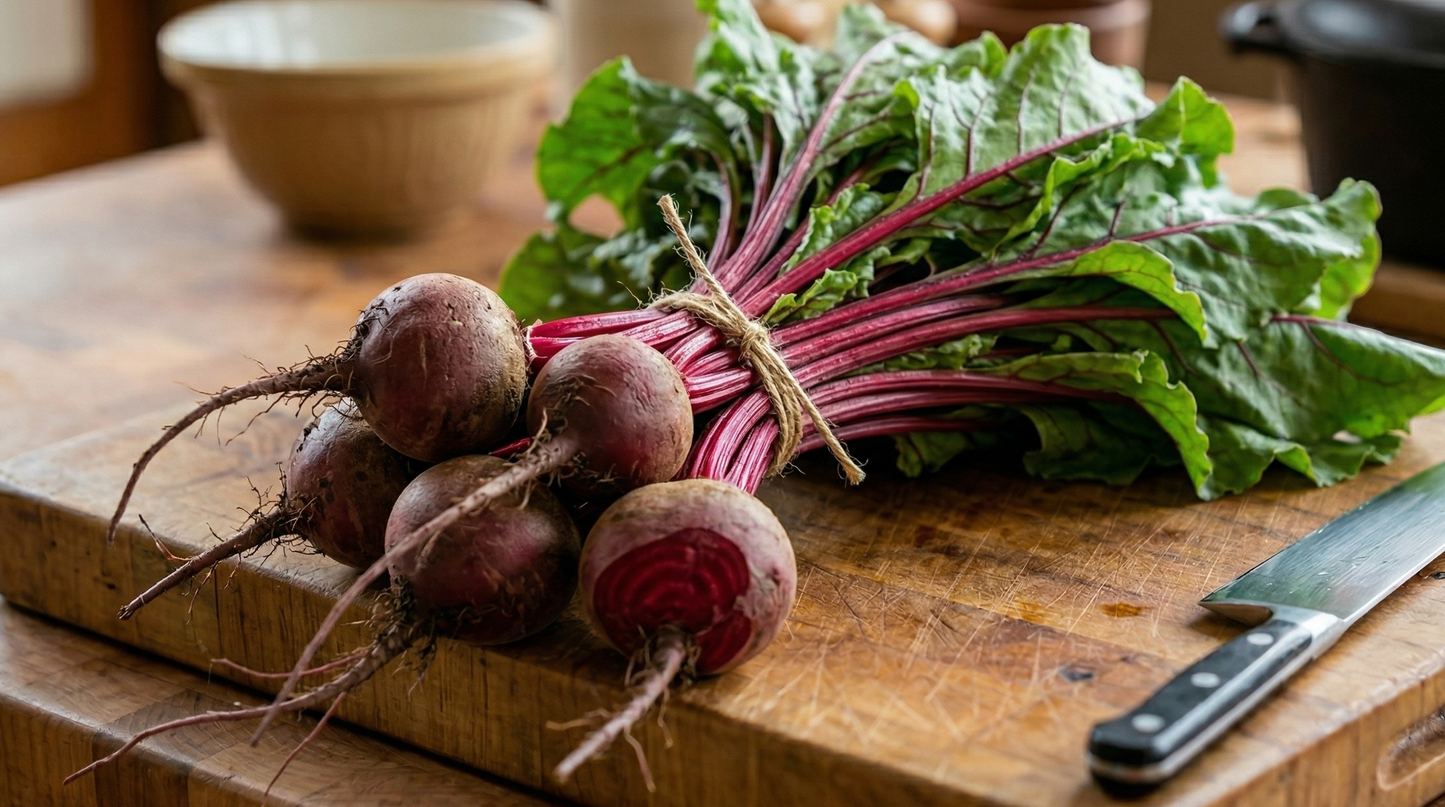
Beta vulgaris 'Boltardy' Heritage bolt-resistant beetroot, RHS AGM
The variety against which all other beetroot is measured. Boltardy has been the standard British beetroot for generations, and there is a reason every gardening expert from Rachel de Thame to Charles Dowding to Monty Don keeps coming back to it: it works. Sweet, smooth, evenly globe-shaped, deep ruby-red roots with tender, ring-free flesh and that proper earthy beetroot flavour. RHS Award of Garden Merit. Genuinely difficult to grow badly.
The name is a clue. Boltardy is the most bolt-resistant of the traditional beetroot varieties — meaning it can be sown earlier in the season than other types without the risk of running to seed when a cold snap arrives. This is the single most useful trait a UK beetroot variety can have. Beetroot is particularly sensitive to cold; a two-week run of temperatures below 10°C in early growth signals "winter" to the plant, which then bolts to flower as soon as warmth returns. Boltardy is bred to resist this trigger, opening up a sowing window from mid-March (under cloches) right through to mid-July.
The other defining feature of Boltardy is the texture of the cooked root: the flesh stays tender, smooth, and entirely free of the woody concentric rings that mar some varieties. It is a "monogerm-equivalent" in the sense that the breeding has been refined for clean, single-rooted growth from each seed cluster, giving you good evenly-sized roots without thinning becoming the major job of the season.
Boltardy is open-pollinated, meaning seed saved from your best roots will grow true to type the following year — making a single packet a multi-year investment for the seed-saver.
A note on growing
Direct sow outdoors from mid-March (under cloches or fleece for the earliest crops) through to mid-July, into finely-prepared, well-cultivated soil that has been watered ahead of sowing. Sow seeds at 2.5cm depth in rows 30cm apart. Germination takes 10–14 days; cold spring soil slows things considerably. Each beetroot "seed" is a multigerm cluster — expect 2–4 seedlings per station and thin to the strongest single plant once they are large enough to handle, leaving 10cm between final plants. The thinnings make excellent baby leaf salad.
For continuous harvest, sow a short row every two to three weeks from March through to mid-July. The earliest sown roots will be ready from June; later sowings can be left in the ground or lifted and stored into winter. Keep the soil consistently moist throughout the season — uneven watering is the single most common cause of split or woody roots.
Harvest from June through to October, when roots reach golf-ball to cricket-ball size. Tender baby beets are at their sweetest at golf-ball stage; cricket-ball size still eats well but begins to lose the finest texture. Twist (rather than cut) the leaves off when harvesting to avoid the root "bleeding" its juice during cooking.
Where it shines
In the kitchen: Boltardy is the most versatile beetroot variety we grow. Boil with the skin on, then slip the skin off after cooking, for the sweetest, juiciest finish. Roast in chunks with olive oil and thyme for caramelised intensity. Slice raw with a mandoline into salads with goat's cheese and walnuts. Pickle in spiced vinegar for winter storage. Make borscht. Make beetroot cake (yes, really). Juice with apple and ginger.
In the garden: a row of Boltardy is one of the most reliable harvests a UK kitchen garden can produce. It tolerates a wide range of soils, asks for nothing but consistent moisture and an occasional weeding, and produces a crop almost regardless of the season. Particularly recommended for new vegetable gardeners — if you can grow Boltardy, you can grow beetroot.
Plant alongside
Beetroot is an easy companion vegetable that tolerates close neighbours and competes politely. Plant alongside lettuce (which benefits from the light shade beetroot's leaves provide), onions (which deter aphids and leaf miners), and bush beans (which fix nitrogen in the soil). Avoid planting near runner beans, which can stunt root development.
Material & Sizing
All of our products are handmade in the UK using carefully selected materials, chosen for durability and suitability for their intended use.
All dimensions are approximate and measured externally.
As each item is handmade, minor variations in size and finish may occur.
This does not affect the strength or intended use of the product.
Materials
- Crafted from quality timber or materials appropriate to the product type
- Designed for strength, stability, and everyday use
- Finished with care to ensure a clean, consistent appearance
(Planters are built using timber suited for outdoor use. Non-Outdoor items use untreated materials where appropriate.)
Sizing
- Dimensions are listed on each product page
- Measurements are approximate due to the handmade nature of our products
- If you need a custom size or have specific requirements, bespoke options are available
If you’re unsure which size or product is right for your space, feel free to get in touch before ordering.
If you have any questions before ordering, feel free to get in touch.
Once your order has been dispatched, you’ll receive a confirmation email with tracking details. You can also view your order status anytime by signing in to your customer account.