

Beetroot Chioggia
Beetroot Chioggia
Couldn't load pickup availability
- Handmade in the UK
- Crafted from quality materials
- Made to order
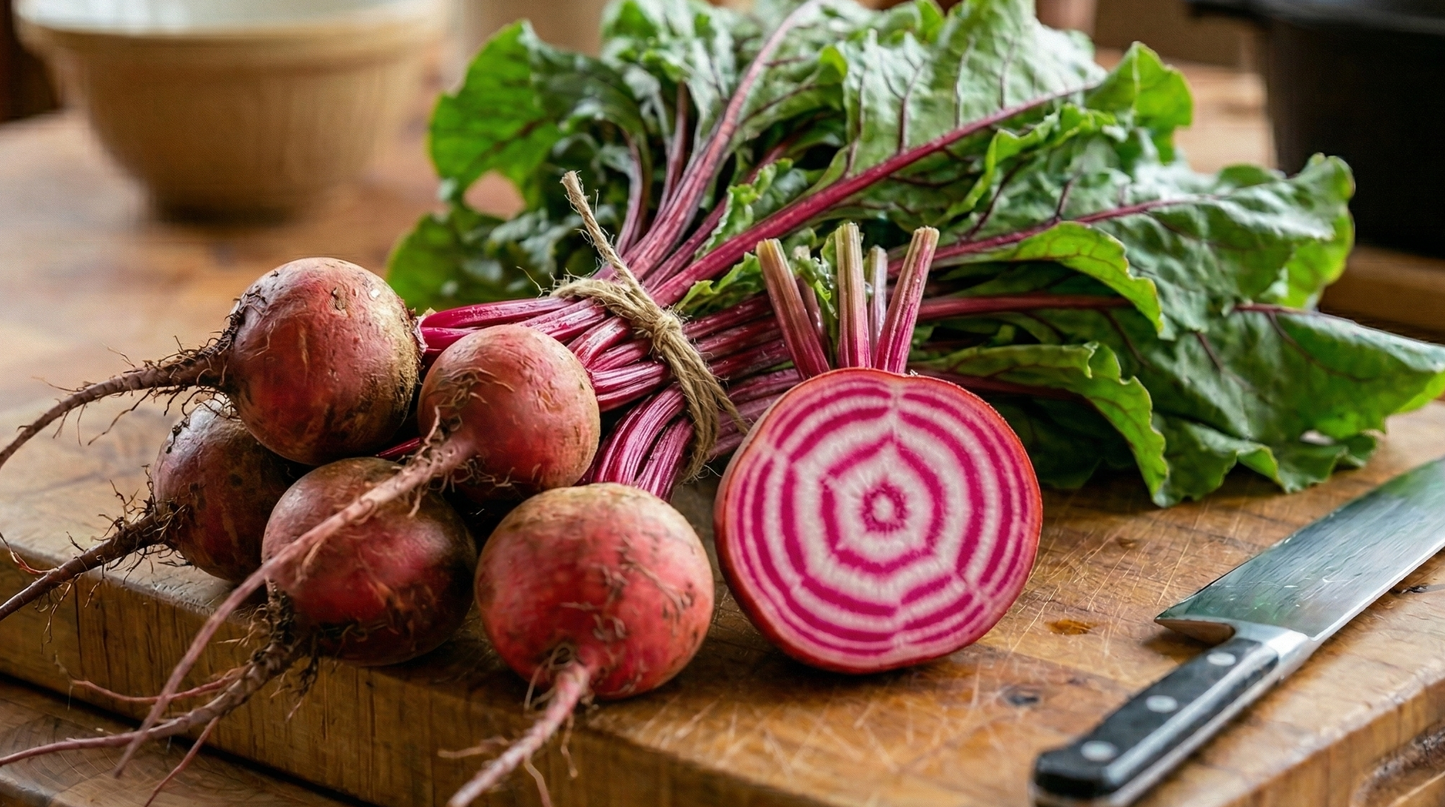
Beta vulgaris 'Chioggia' Italian heritage variety with pink-and-white concentric rings
Slice into a Chioggia beetroot for the first time and the gasp is involuntary. Concentric pink-and-white rings, perfectly even, perfectly distinct, like a polished cross-section of agate. This is the Italian heritage beetroot from the coastal town of Chioggia near Venice, where it has been grown for over 150 years — and it is grown today for one reason: nothing else looks quite like it on the plate.
The flavour is genuinely good — sweeter and milder than red varieties, with a delicate earthy note rather than the deep intensity of Boltardy or Detroit. But Chioggia's eating quality is honestly a bonus. The reason gardeners grow it is the look. Sliced raw into salads, the candy-striped rings turn a basic plate into something striking. Shaved thin on a mandoline, the slices look almost painted. Layered into a beetroot carpaccio with goat's cheese and walnuts, they bring instant occasion to a simple lunch.
One caveat worth knowing up front: the rings fade when cooked. Boil or roast Chioggia and the beautiful pattern blurs to a uniform pink-rose colour — still attractive, still delicious, but the candy stripes are gone. To preserve the rings, eat Chioggia raw — shaved, sliced, or grated. This is genuinely the variety's defining quality, and it shapes how you use it in the kitchen.
Chioggia is open-pollinated heritage, meaning seed saved from your best roots will grow true the following year. The variety dates from the mid-1800s and remains genetically stable — what you grow this year is what they grew in Veneto a century and a half ago.
A note on growing
Chioggia is slightly less bolt-resistant than Boltardy — in cold springs (six consecutive nights below 7°C in late April is the typical trigger), some plants will run to seed rather than form proper roots. For this reason, hold off your earliest sowings until soil temperatures are reliably above 7°C — mid-April in southern England, late April further north — or use fleece protection if sowing in March. Direct sow outdoors from April through to July, into finely-prepared, well-cultivated soil that has been watered ahead of sowing.
Sow seeds at 2.5cm depth in rows 30cm apart. Germination takes 10–14 days. Each beetroot "seed" is a multigerm cluster — expect 2–4 seedlings per station and thin to the strongest single plant once they are large enough to handle, leaving 10cm between final plants. Keep soil consistently moist throughout the growing season. Inconsistent watering causes split or woody roots, and bolting risk increases under drought stress as well as cold stress.
Harvest from June through to October. Chioggia is at its best at golf-ball to small-cricket-ball size — younger roots show the clearest, most distinct ring patterns. Older roots remain attractive but the rings can become slightly diffused.
Where it shines
In the kitchen, exclusively raw if you want the candy-stripe effect. Shave paper-thin on a mandoline for salads. Slice into discs and layer with sliced apple and crumbled blue cheese. Grate raw into coleslaw for a colour transformation. Pickle in white vinegar (acid preserves more of the colour than vinegar with red beets, but the contrast still fades significantly). Cooked Chioggia is perfectly good to eat, but if you want the rings, eat it raw.
In the garden, Chioggia is the variety you grow alongside Boltardy and Boldor for variety-pack harvest baskets — one of each makes a striking trio on the chopping board and in the bowl. The young leaves are excellent in baby leaf salads, with the same delicate, sweet flavour as the roots.
Plant alongside
Beetroot tolerates close neighbours politely. Plant alongside lettuce, onions (which deter aphids and leaf miners), and bush beans (which fix nitrogen). Avoid runner beans, which can stunt root development. For genuine variety-pack growing, pair Chioggia with Boltardy (red) and Boldor (golden) in the same bed for three-colour harvests.
Material & Sizing
All of our products are handmade in the UK using carefully selected materials, chosen for durability and suitability for their intended use.
All dimensions are approximate and measured externally.
As each item is handmade, minor variations in size and finish may occur.
This does not affect the strength or intended use of the product.
Materials
- Crafted from quality timber or materials appropriate to the product type
- Designed for strength, stability, and everyday use
- Finished with care to ensure a clean, consistent appearance
(Planters are built using timber suited for outdoor use. Non-Outdoor items use untreated materials where appropriate.)
Sizing
- Dimensions are listed on each product page
- Measurements are approximate due to the handmade nature of our products
- If you need a custom size or have specific requirements, bespoke options are available
If you’re unsure which size or product is right for your space, feel free to get in touch before ordering.
If you have any questions before ordering, feel free to get in touch.
Once your order has been dispatched, you’ll receive a confirmation email with tracking details. You can also view your order status anytime by signing in to your customer account.