

Cabbage Greyhound
Cabbage Greyhound
Couldn't load pickup availability
- Handmade in the UK
- Crafted from quality materials
- Made to order
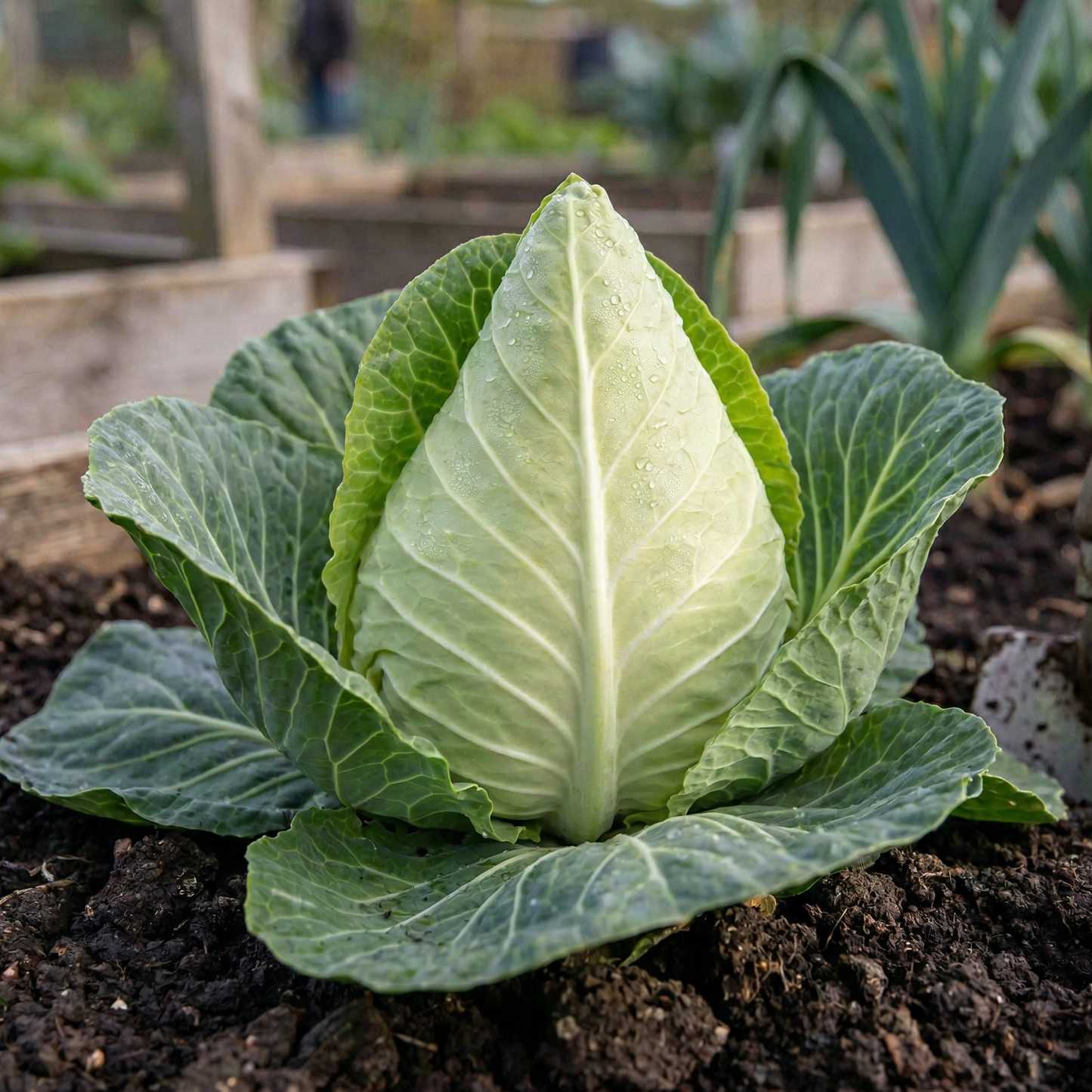
Brassica oleracea 'Greyhound' Heritage pointed summer cabbage
The cabbage for cooks who have always thought they did not like cabbage. Greyhound is the British pointed summer cabbage, an old reliable variety named — with admirable directness — for how fast it grows when happy. Sweet, tender, fine-flavoured, with a tightly-packed pointed head and almost no wasteful outer leaves. This is genuinely a cabbage that converts cabbage sceptics, and it grows so easily that it has been a kitchen-garden fixture for well over a century.
The conical head sets Greyhound apart from the round drumhead varieties. The leaves wrap more tightly around a smaller central core, giving a denser heart-to-outer-leaf ratio — more eating quality, less waste. The flavour is sweeter and more delicate than large round cabbages, and the texture is tender rather than tough, making Greyhound outstanding lightly steamed, braised, or used raw in coleslaw rather than boiled to grey submission. The pale green of the heart creates a lighter, more refined coleslaw than the dense purple-green of red types — subtle, sweet, and almost grassy.
One of the best things about Greyhound is its early-harvest flexibility. Plants do not need to reach full heart maturity to be useful: at six to eight weeks from transplanting, before the heart has fully formed, plants can be pulled and used as spring greens — loose, tender, sweet brassica leaves that are among the first fresh green vegetables of the season. This extends Greyhound's useful harvest window from full mature hearts to early greens, and a succession of sowings from February to July provides fresh cabbage on the plate from May right through to November.
Greyhound is open-pollinated heritage, meaning seed saved from your best heads will grow true to type the following year. The variety has been in continuous cultivation since the early twentieth century.
A note on growing
Sow indoors from February (heated propagator or warm windowsill) for the earliest crops, or in a seedbed from April to June for successive harvests. Sow at approximately 1.5cm depth in seed compost. Germination takes 7–10 days at 10–18°C. Once seedlings have four true leaves, transplant into their final position in firm, fertile soil, spacing 30–40cm apart between plants and 45cm between rows.
Three practices define Greyhound success. Net immediately and without exception — one unnetted day in summer is enough for the cabbage white butterfly to find the crop, and a single generation of caterpillars can reduce a healthy plant to skeleton in two weeks. Fine mesh netting from transplant to September removes the problem entirely. Plant firmly — so firmly that you cannot pull the plant out by a leaf without it tearing. Loose planting allows wind-rock that damages the root system and produces misshapen, hollow hearts. Sow successionally — small batches every four to six weeks from February to July, rather than one large sowing all at once. Greyhound matures quickly (around 10–12 weeks from transplant) and a single sowing produces all the hearts simultaneously, leading to glut.
Greyhound is ready to harvest when the pointed heads feel firm and full to the gentle squeeze of a hand. Cut at the base with a sharp knife. If you score a 1cm-deep cross in the remaining stump, the plant often produces a second flush of smaller secondary heads — not as large as the original but a genuine bonus.
Where it shines
In the kitchen, Greyhound is the pointed cabbage that earns its keep across every preparation. Lightly steamed with butter and a grating of nutmeg. Shredded raw into coleslaw with carrot and a vinegar-mustard dressing. Halved and braised in stock with bacon and apple. Stir-fried with garlic and chilli. Pickled into sauerkraut, where the sweetness of the heart produces an exceptionally fine ferment. Used at every stage from young spring greens (pulled at six weeks) through mature pointed hearts (cut at three months).
In the garden, Greyhound's compact 30cm spread allows closer spacing than round-headed varieties, making it particularly useful in gardens where space is limited. A succession-sowing approach — four or five small sowings spread February to July — provides fresh hearts continuously without overwhelming you with simultaneous harvests.
Plant alongside
Cabbage benefits from companion plants that deter cabbage white butterflies and aphids. Plant alongside French Marigold 'Spanish Brocade' whose strong scent confuses egg-laying butterflies, and Nasturtiums which act as a sacrificial decoy crop that aphids prefer to brassicas. Onions and leeks planted between cabbage rows deter cabbage root fly and aphids. Avoid planting near strawberries, runner beans, or tomatoes — brassicas share little common ground with these crops.
Material & Sizing
All of our products are handmade in the UK using carefully selected materials, chosen for durability and suitability for their intended use.
All dimensions are approximate and measured externally.
As each item is handmade, minor variations in size and finish may occur.
This does not affect the strength or intended use of the product.
Materials
- Crafted from quality timber or materials appropriate to the product type
- Designed for strength, stability, and everyday use
- Finished with care to ensure a clean, consistent appearance
(Planters are built using timber suited for outdoor use. Non-Outdoor items use untreated materials where appropriate.)
Sizing
- Dimensions are listed on each product page
- Measurements are approximate due to the handmade nature of our products
- If you need a custom size or have specific requirements, bespoke options are available
If you’re unsure which size or product is right for your space, feel free to get in touch before ordering.
If you have any questions before ordering, feel free to get in touch.
Once your order has been dispatched, you’ll receive a confirmation email with tracking details. You can also view your order status anytime by signing in to your customer account.