

Carrot Autumn King 2
Carrot Autumn King 2
Couldn't load pickup availability
- Handmade in the UK
- Crafted from quality materials
- Made to order
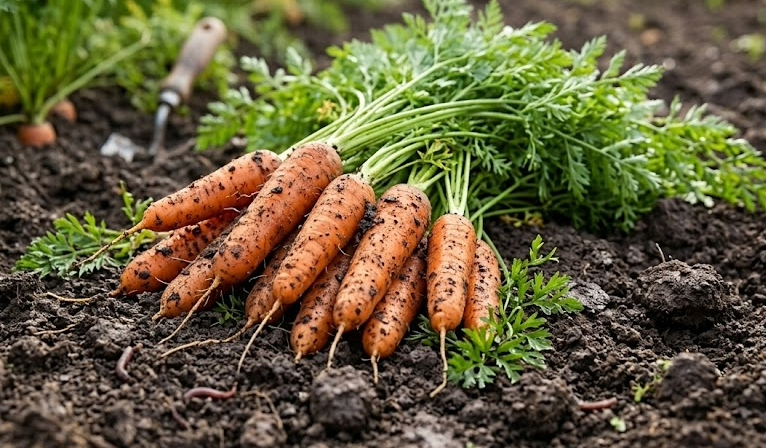
Daucus carota 'Autumn King 2' Heritage long-rooted maincrop carrot, autumn and winter storage
The big, deep-rooted maincrop carrot that fills the storage shelves for winter. Autumn King 2 produces large, broad-shouldered, long, conical roots with deep orange flesh and a heavy crop weight per row that few other varieties match. This is the carrot for the gardener who wants to fill a sand-stored crate with roots that will see the kitchen through from October to the following spring — not the delicate quick-grow salad carrot, but the substantial winter staple that has been a British heritage variety for generations.
"Autumn King 2" is an improved selection of the original Autumn King variety, with refinements in colour intensity, uniformity, and crack-resistance. The roots typically reach 20–25cm long with broad shoulders 4–5cm across, and weights of 200g and above are common on well-grown plants. The deep orange colour holds well through long storage. The flavour is honest, sweet, and properly carroty — nothing exotic, simply the dependable rich flavour that defines a good winter root vegetable. Particularly fine flavour develops after the first autumn frosts, when the sugars concentrate in response to cold.
Autumn King 2 is open-pollinated heritage, meaning seed saved from your best plants (allowed to flower in the second year) will grow true the following season.
A note on growing
Direct sow outdoors from April to July, into finely-prepared, stone-free, deep soil that has not been freshly manured. Fresh manure causes forked, distorted roots — the bed should have been manured the previous autumn, or follow a previous crop like beans or peas. Sow seed thinly at 1.5cm depth in rows 30cm apart. Germination takes 14–21 days; carrot seed is small and germination is slow, so be patient. Thin seedlings in stages to 7–10cm apart between final plants.
Carrot fly is the single biggest threat to a UK carrot crop. The adult flies locate plants by smell — particularly the smell of crushed foliage during thinning. Three defences work in practice: sow thinly enough to minimise the need for thinning; cover the bed with insect-proof mesh (or fleece) from sowing through to harvest; or plant rows alongside strongly-scented companion plants like onions and chives that mask the carrot smell. The mesh approach is by far the most reliable.
Water consistently through the growing season. Drought followed by heavy watering causes the roots to crack — the steady moisture supply is more important than the absolute volume.
Harvest from August onwards, though the variety is bred for autumn and winter cropping. Roots can be left in the ground through autumn and into winter (covered with straw in cold areas) or lifted in October and stored in damp sand in a cool, dark place. Stored properly, Autumn King 2 keeps for four to six months without significant quality loss.
Where it shines
In the kitchen, this is the carrot of slow-cooked Sunday lunches: roasted whole with herbs and olive oil, glazed with butter and honey, simmered in stews, mashed with swede, juiced for the breakfast glass. The size makes it slightly less suited to small-batch quick preparations — you don't typically slice an Autumn King for a stir-fry — but for everything where size and storage matter, it is the maincrop carrot of choice.
In the garden, sow Autumn King 2 alongside an early variety like Paris Market for staggered harvests — the small round Paris Market roots in June, the larger Autumn King 2 from October onwards into winter. Together they provide ten months of fresh carrots from your own garden.
Plant alongside
Carrots benefit enormously from companion planting that confuses carrot fly. Plant alongside onions, leeks, or chives, whose strong sulphur scents mask the carrot smell. Calendula 'Neon' attracts hoverflies and other beneficial predators. Sage and rosemary nearby help mask carrot odour. Avoid planting near dill or fennel, which can stunt root development through chemical antagonism.
Material & Sizing
All of our products are handmade in the UK using carefully selected materials, chosen for durability and suitability for their intended use.
All dimensions are approximate and measured externally.
As each item is handmade, minor variations in size and finish may occur.
This does not affect the strength or intended use of the product.
Materials
- Crafted from quality timber or materials appropriate to the product type
- Designed for strength, stability, and everyday use
- Finished with care to ensure a clean, consistent appearance
(Planters are built using timber suited for outdoor use. Non-Outdoor items use untreated materials where appropriate.)
Sizing
- Dimensions are listed on each product page
- Measurements are approximate due to the handmade nature of our products
- If you need a custom size or have specific requirements, bespoke options are available
If you’re unsure which size or product is right for your space, feel free to get in touch before ordering.
If you have any questions before ordering, feel free to get in touch.
Once your order has been dispatched, you’ll receive a confirmation email with tracking details. You can also view your order status anytime by signing in to your customer account.