


Chives
Chives
Couldn't load pickup availability
- Handmade in the UK
- Crafted from quality materials
- Made to order

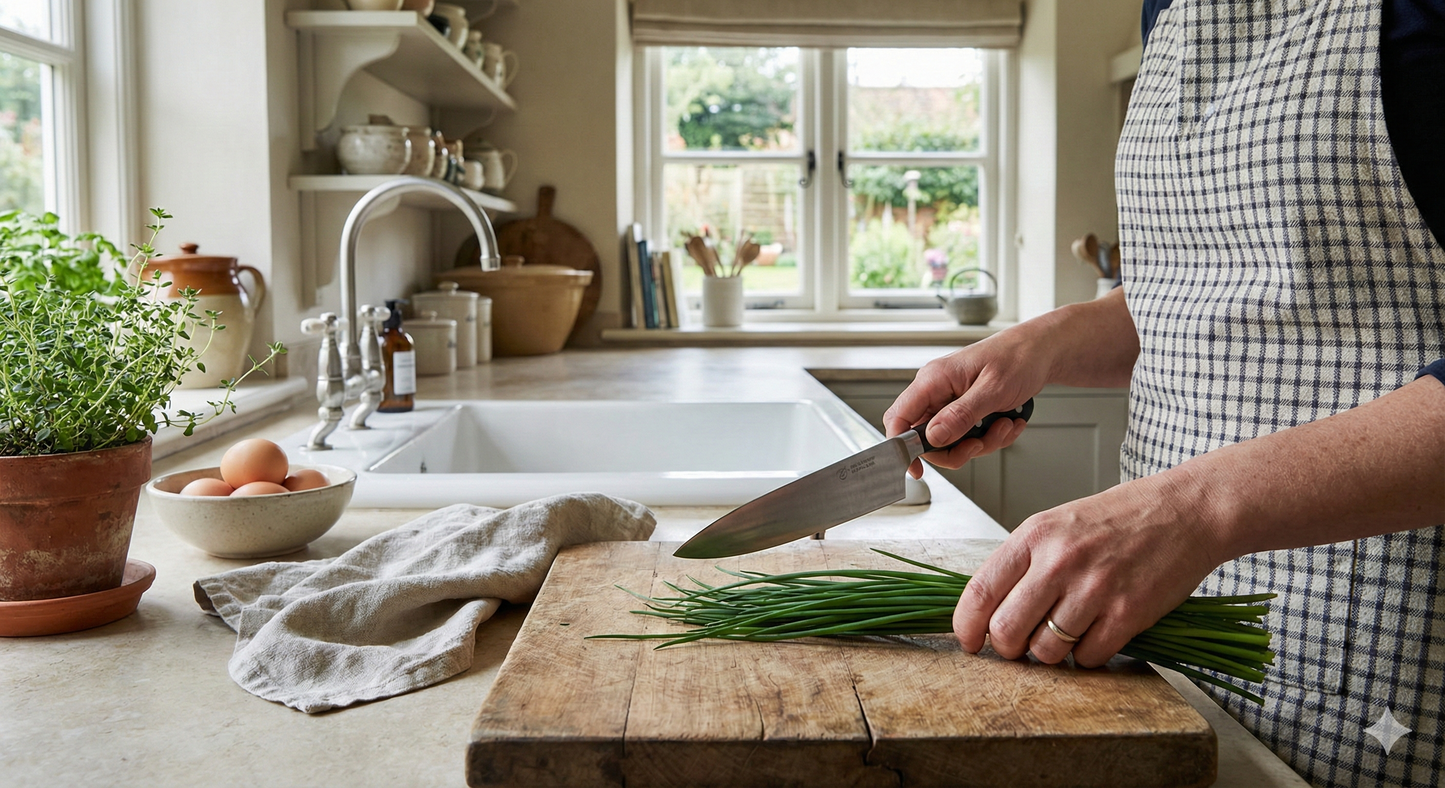
Allium schoenoprasum 'Chives' The perennial herb that gives three things at once — leaves, flowers, and quiet protection for the rest of the garden
If a herb can earn its place in three different ways at once, that's a serious case for growing it — and chives manage exactly that. They give you the mild-onion hollow leaves that any cook reaches for half a dozen times a week. They give you the lavender pompom flowers that are fully edible, beautiful, and absolutely loved by bees. And they give you the quiet sulphur-rich underground presence that helps protect nearby crops from carrot root fly and aphids. One small clump in a corner of the kitchen garden, and you've got three good things going at once.
They're also a true hardy perennial — which sets them apart from most of the kitchen-garden herbs you'll sow. Plant a clump from seed in your first year and, with very little fuss, you'll be cutting from the same plant five, ten, twenty years later. The clump simply gets larger and more productive over time; lift and divide it every few seasons and you'll have spare plants to give away or extend round the garden. The £1.95 packet you sow this spring is one of the better lifetime investments in the seed catalogue.
Chives sit comfortably amongst the four classic French fines herbes — alongside chervil, parsley and tarragon — and the trio of perfect uses (eggs, soft cheeses, summer salads) is where they shine in the kitchen. But where they truly come into their own is the moment in early summer when the whole clump throws up its lavender-pink globe flowers: small drumstick pompoms held above the foliage on slim stems, each globe made of dozens of tiny star-shaped florets. They're properly beautiful, they last well as cut flowers, the bees adore them, and — if you remember — they're entirely edible. Scatter the petals over a green salad or a goat's cheese tart and you'll have one of the loveliest things on the table.
RHS Plants for Pollinators
Chives are listed on the RHS Plants for Pollinators register — recommended as especially beneficial for bees, butterflies and other pollinating insects. The early-summer flowers are particularly valuable for bumblebees, and a single mature clump can be alive with foragers on a warm June afternoon. A herb that quietly does both the kitchen and the wildlife garden at once.
A note on growing
Chives are one of the easier herbs you can raise from seed, and once established they'll come back every spring for years to come. Sow indoors from March to May, scattering the seeds thinly into trays or modules of fresh seed compost, and covering with a light dusting of compost or vermiculite. Keep moist and warm (15–20°C) — germination usually takes two to three weeks. Or sow direct from April to June straight into a well-prepared bed once the soil has warmed.
The seedlings come up looking remarkably like fine green grass — thread-thin and unpromising — but don't be deterred; this is how chives always start. Once they've got a couple of inches of height, prick out into small clumps of five or six seedlings per cell (chives are happy growing as a clump and don't need pricking out individually). Harden off and plant out into the garden in late spring, 30cm apart, in a sunny or lightly shaded spot.
They tolerate most soils, but do best in a well-drained, moisture-retentive position. Water in dry spells; otherwise they ask for very little. Don't feed — like most herbs, lean soil gives the best flavour. After flowering, cut the whole clump back to ground level to encourage a fresh flush of new leaves for late-summer cutting.
Every three or four years, lift the clump in autumn or early spring, divide it into smaller sections with a sharp spade, and replant each section. This keeps the plants vigorous and is the easiest way to extend chives round the garden — or to share them with gardening friends.
Where they shine
Chives are the herb of finishing — snip them with a small pair of scissors or flower snips straight over the dish, at the very end. They lose their fresh oniony aroma quickly once cut and warmed, so they belong on the plate rather than in the pan. They're particularly lovely on:
- Eggs of any kind — scrambled, omelette, poached, boiled, in a quiche or frittata. The classic pairing
- Baked potatoes with sour cream or soft cheese — the cottage-garden version of the steakhouse classic
- Summer salads — the leaves in fine snippets, and the lavender pompom flowers torn into petals over the top
- Soft cheeses — fresh goat's cheese, ricotta, cream cheese on bread
- Vichyssoise, leek and potato, and other delicate soups — scattered over at serving
- Cucumber sandwiches — tea-time, in summer, with chives finely chopped into the butter
- New potatoes — tossed in butter with the snipped leaves
In the garden, plant them amongst carrots, tomatoes and roses — long-established companion-planting wisdom suggests their underground sulphur compounds help deter carrot root fly, aphids and black spot. A few clumps tucked round the vegetable garden quietly earn their keep beyond the kitchen.
And as a border edging or front-of-bed plant, chives are surprisingly good-looking: neat fountain-like clumps of bright green foliage all season, with the lavender pompom flowers in early summer rising above. There's no rule that says herbs have to live in a herb garden — chives look perfectly handsome amongst ornamental planting.
At a glance
- Type: Hardy perennial herb (Allium schoenoprasum) — comes back every year
- Height: 25–35cm in leaf; 40–50cm in flower
- Spread: 25cm; Spacing: 30cm
- Flavour: mild, sweet onion — one of the four classic French fines herbes
- Sow: Indoors March to May; direct April to June
- Flowering: June to July — lavender pompom drumstick flowers
- Position: Sun or light shade; ordinary garden soil; don't feed
- Care: Easy; divide every 3–4 years to keep vigorous
- RHS Plants for Pollinators — especially loved by bees
- Edible flowers — the pompoms are fully edible, scatter the petals into salads
- Companion plant — deters carrot root fly and aphids amongst veg and roses
- Approx. 200 seeds per packet
Plant alongside
Chives are at their most useful planted amongst other things rather than in a dedicated herb-bed corner. Plant alongside French Marigold 'Spanish Brocade' for layered pest and pollinator support, or Calendula 'Neon' for an edible-flower cottage-garden combination. Among the vegetables, tuck them around carrots, tomatoes, peppers, and at the foot of roses. In the herb garden, parsley, chervil and tarragon are the natural fines herbes partners.
Material & Sizing
All of our products are handmade in the UK using carefully selected materials, chosen for durability and suitability for their intended use.
All dimensions are approximate and measured externally.
As each item is handmade, minor variations in size and finish may occur.
This does not affect the strength or intended use of the product.
Materials
- Crafted from quality timber or materials appropriate to the product type
- Designed for strength, stability, and everyday use
- Finished with care to ensure a clean, consistent appearance
(Planters are built using timber suited for outdoor use. Non-Outdoor items use untreated materials where appropriate.)
Sizing
- Dimensions are listed on each product page
- Measurements are approximate due to the handmade nature of our products
- If you need a custom size or have specific requirements, bespoke options are available
If you’re unsure which size or product is right for your space, feel free to get in touch before ordering.
If you have any questions before ordering, feel free to get in touch.
Once your order has been dispatched, you’ll receive a confirmation email with tracking details. You can also view your order status anytime by signing in to your customer account.