

Cucumber Marketmore 76
Cucumber Marketmore 76
Couldn't load pickup availability
- Handmade in the UK
- Crafted from quality materials
- Made to order
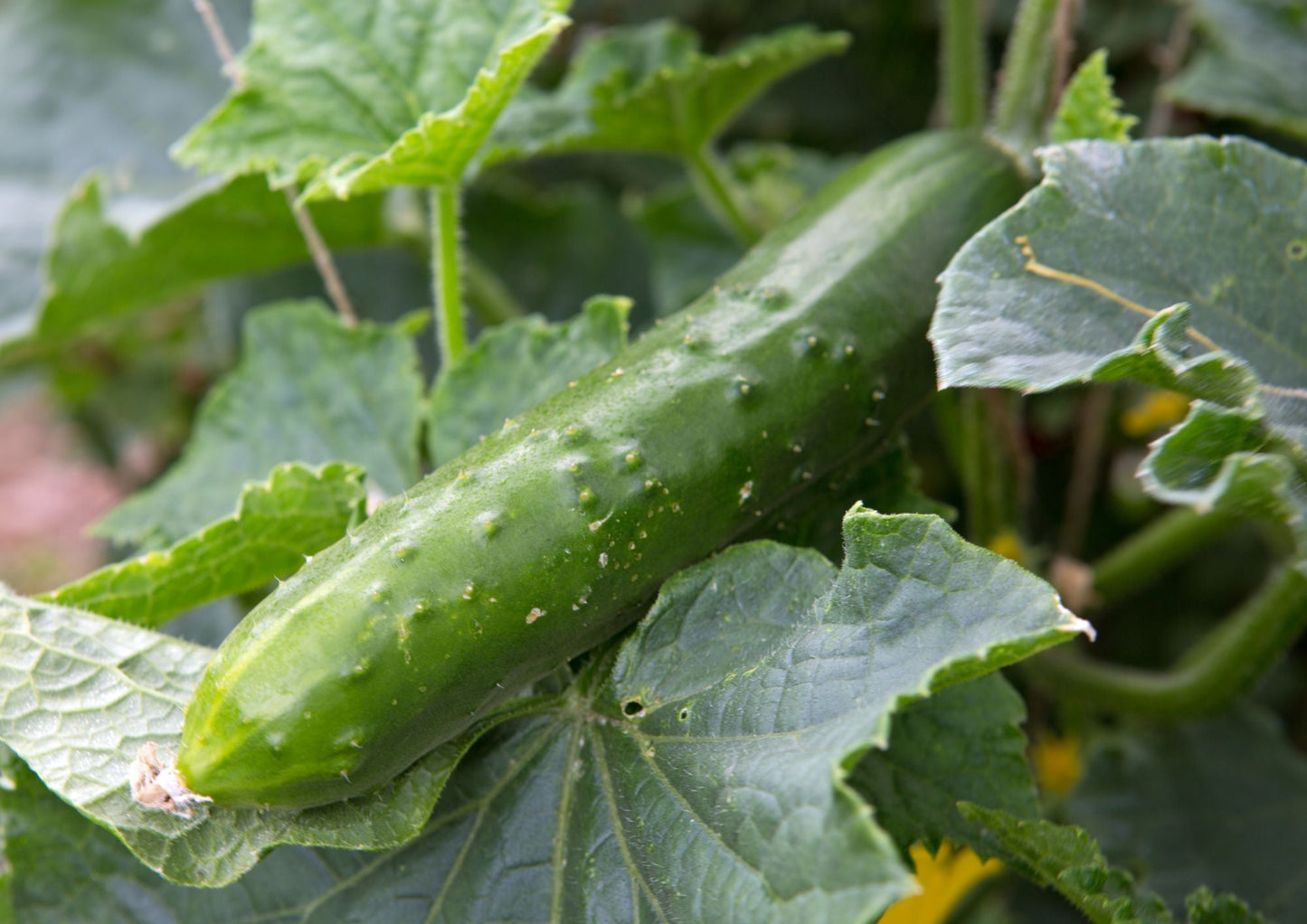
Cucumis sativus 'Marketmore 76' Heritage open-pollinated outdoor ridge cucumber, disease-resistant
The open-pollinated heritage cucumber that has earned its place as one of the most reliable outdoor varieties for British gardens. Marketmore 76 was bred at Cornell University in the mid-1970s and quickly became a global standard for outdoor cucumber growing because of its exceptional disease resistance — particularly to cucumber mosaic virus, scab, and powdery mildew, the three diseases most likely to take down a UK cucumber crop. Despite its American origin, the variety has proven outstanding in the UK climate.
The fruits are classic ridge-type cucumbers: 20–22cm long, slightly bumpy-skinned, deep glossy green with mild ridging. The flesh is crisp and the flavour is honest, fresh, and proper-tasting — less bland than supermarket cucumbers, more characterful, with the kind of fresh-from-the-garden taste that justifies growing your own. Pick young (18–20cm) for the sweetest, most tender fruit; mature fruits at full size are still excellent but slightly seedier.
The single most important fact about Marketmore 76 is that it is open-pollinated. Unlike F1 hybrid cucumbers, seed saved from your best fruits will grow true to type the following year, making this the variety for any gardener interested in seed-saving, heritage cropping, or long-term independence from the seed trade. The vigour and disease resistance are also genuinely impressive — in good conditions, a single plant produces 20–30 fruits across the season, and in years when other varieties succumb to mildew, Marketmore often soldiers on.
A note on growing
Sow indoors from late April to early May in 7cm pots of seed compost, planting seeds on their edge at 2cm depth. Germination takes 5–10 days at 20–25°C. Pot on as seedlings establish, growing on at 18°C minimum.
Plant out in early to mid-June once frost risk has passed and soil has warmed to 15°C+. Choose a sunny, sheltered position in fertile, well-drained soil enriched with well-rotted manure or compost. Allow 60cm between plants. Marketmore can be grown trailing along the ground or trained vertically up canes, netting, or a trellis — vertical training is recommended for UK gardens (saves space, produces straighter fruits, easier to inspect for ripeness).
Water consistently and generously — irregular watering produces bitter fruits. Feed weekly with high-potash tomato food from flowering onwards. Mulch around the base. Pinch out the main stem at 1.8m tall to encourage sideshoot production.
Harvest from July through to October. Cut fruits cleanly with a sharp knife. Pick small and pick often — the more you pick, the more the plant produces. Cucumbers stay best on the plant if regularly harvested; left to grow to full ripeness, the plant slows its production sharply.
Note on bitterness: traditional ridge cucumbers like Marketmore can produce slightly more bitter compounds (cucurbitacins) than modern burpless types, particularly under drought stress. Consistent watering and not letting fruits over-mature both significantly reduce bitterness.
Where it shines
In the kitchen, Marketmore 76 produces the proper "garden cucumber" taste that supermarket cucumbers lack. Slice raw into salads. Make tzatziki, raita, or cucumber sandwiches the traditional English way. Pickle in spiced vinegar with dill and garlic for winter gherkins (Marketmore particularly suits pickling because of its firm crisp texture). Juice with mint and lime for cold summer drinks. The slightly thicker skin holds up well in pickling jars where thin-skinned types can go soft.
In the garden, two or three plants is typically enough for a family. For the seed-saver, Marketmore is the variety to focus on — let one or two fruits grow to full ripeness (when the skin turns from green to yellow-brown), scoop out the seeds, ferment in water for three days to remove the seed coat, dry, and store for the following year. A single fruit yields hundreds of seeds. Pair with Burpless Tasty Green F1 to compare heritage open-pollinated and modern hybrid types from the same garden.
Plant alongside
Cucumbers benefit from companion planting that attracts pollinators and deters pests. Plant alongside French Marigold 'Spanish Brocade' to deter aphids. Nasturtiums act as decoy crops. Beans nearby fix nitrogen. Dill is an excellent companion and shares the pickling-jar tradition. Avoid planting near potatoes and aromatic herbs like sage.
Material & Sizing
All of our products are handmade in the UK using carefully selected materials, chosen for durability and suitability for their intended use.
All dimensions are approximate and measured externally.
As each item is handmade, minor variations in size and finish may occur.
This does not affect the strength or intended use of the product.
Materials
- Crafted from quality timber or materials appropriate to the product type
- Designed for strength, stability, and everyday use
- Finished with care to ensure a clean, consistent appearance
(Planters are built using timber suited for outdoor use. Non-Outdoor items use untreated materials where appropriate.)
Sizing
- Dimensions are listed on each product page
- Measurements are approximate due to the handmade nature of our products
- If you need a custom size or have specific requirements, bespoke options are available
If you’re unsure which size or product is right for your space, feel free to get in touch before ordering.
If you have any questions before ordering, feel free to get in touch.
Once your order has been dispatched, you’ll receive a confirmation email with tracking details. You can also view your order status anytime by signing in to your customer account.