

Kale Nero di Toscana
Kale Nero di Toscana
Couldn't load pickup availability
- Handmade in the UK
- Crafted from quality materials
- Made to order
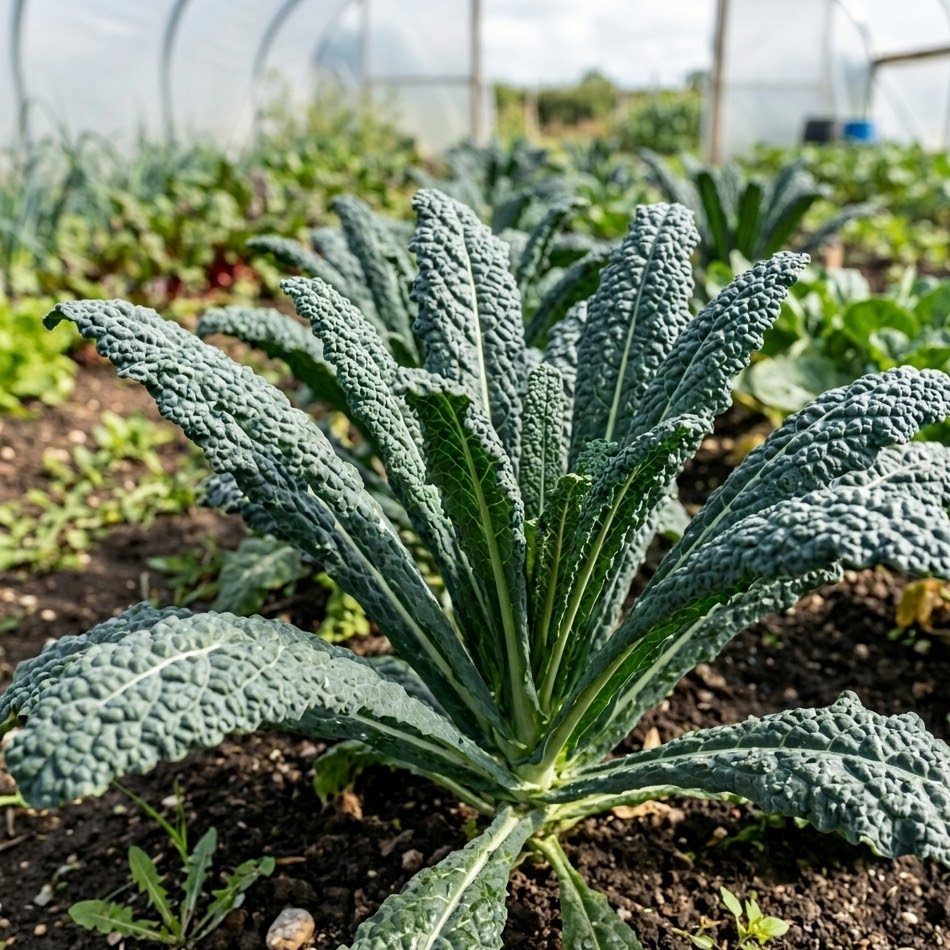
Brassica oleracea 'Nero di Toscana' Italian heritage Tuscan black kale, also known as Cavolo Nero or Lacinato
The Italian Tuscan kale that has quietly become one of the most fashionable vegetables in the modern kitchen garden — and entirely deservedly. Nero di Toscana produces long, narrow, deeply blistered dark blue-green leaves with an almost reptilian texture, growing in an upright rosette from a central stem 80cm tall. The leaves are darker, more strongly flavoured, and considerably more useful in cooking than ordinary curly kale. Across the Italian-speaking kitchen-garden world, this is the kale — cavolo nero in Italy, lacinato in America, dinosaur kale or palm tree kale to its English-speaking enthusiasts, Tuscan kale in serious recipe books.
The flavour is what sets Nero di Toscana apart. Where curly kale can be tough, bitter, and slightly mineral-tasting, Cavolo Nero is rich, sweet, almost nutty, with deeper umami notes that develop as plants are touched by autumn frost. The texture is fine enough to cook quickly — just a few minutes in a hot pan with olive oil and garlic, rather than the long boiling that curly kale often demands. It is one of the very few green vegetables that genuinely benefits from cold weather: leaves harvested after October frosts are considerably sweeter and more tender than summer leaves.
The plant itself is also genuinely beautiful — upright, architectural, sculpturally interesting, holding its dramatic dark form through autumn and into winter when most of the garden has gone brown. It earns its place in an ornamental kitchen garden or even an edimental flower border.
Nero di Toscana is open-pollinated heritage, in continuous cultivation in Tuscany since at least the eighteenth century. Seed saved from your best plants will grow true the following year.
A note on growing
Sow indoors from March to May at 1.5cm depth in seed compost. Germination takes 7–10 days at 10–18°C. Alternatively, direct sow outdoors from April to June in a seedbed for transplanting later. Transplant into final position from May to July, once plants have four true leaves and are 10–12cm tall. Plant firmly, spacing 45cm apart in both directions. As with all brassicas, loose planting allows wind-rock that produces poor plants.
Net immediately against cabbage white butterfly from transplanting through to September, and continue netting against pigeons through autumn and winter — wood pigeons can strip a kale plant in a day during cold weather when other food is scarce. Water consistently through dry spells. Feed monthly with a balanced liquid fertiliser.
Harvest from July onwards by picking individual leaves from the outside of the plant, allowing the inner leaves to continue developing. A well-grown plant can be picked from continuously for six to nine months — from late summer through autumn, through winter, and into the following spring before bolting to seed. The plants are exceptionally hardy, surviving temperatures down to -10°C without protection.
Where it shines
In the kitchen, Nero di Toscana is the dark leafy green of authentic Tuscan cooking. The classic preparation is ribollita — a Tuscan bread soup where the kale is the dominant flavour. Strip the leaves from the central stalk (which can be tough), shred finely, and cook briefly in olive oil with garlic and chilli; finish with lemon and salt. Add to pasta with pancetta and parmesan, to white bean soups, to risottos, to baked egg dishes. Crisp into kale chips by tossing torn pieces with olive oil and salt and baking at 150°C for 15 minutes. Use the young inner leaves raw in salads (massage with olive oil and lemon to soften the texture). The flavour pairs naturally with garlic, olive oil, lemon, anchovy, parmesan, and beans.
In the garden, three or four plants is enough for a household. The decorative value through autumn and winter is genuinely outstanding — consider planting in front-of-house positions or in mixed kitchen-garden borders where the architectural form earns its place. The harvest extends from summer right through winter into spring, providing fresh greens during months when little else is producing.
Plant alongside
Kale benefits from companion plants that deter cabbage white butterfly and aphids. Plant alongside French Marigold 'Spanish Brocade' and Calendula 'Neon' to attract beneficial predators. Onions and leeks planted between brassica rows deter cabbage root fly. Avoid planting near strawberries, tomatoes, or runner beans.
Material & Sizing
All of our products are handmade in the UK using carefully selected materials, chosen for durability and suitability for their intended use.
All dimensions are approximate and measured externally.
As each item is handmade, minor variations in size and finish may occur.
This does not affect the strength or intended use of the product.
Materials
- Crafted from quality timber or materials appropriate to the product type
- Designed for strength, stability, and everyday use
- Finished with care to ensure a clean, consistent appearance
(Planters are built using timber suited for outdoor use. Non-Outdoor items use untreated materials where appropriate.)
Sizing
- Dimensions are listed on each product page
- Measurements are approximate due to the handmade nature of our products
- If you need a custom size or have specific requirements, bespoke options are available
If you’re unsure which size or product is right for your space, feel free to get in touch before ordering.
If you have any questions before ordering, feel free to get in touch.
Once your order has been dispatched, you’ll receive a confirmation email with tracking details. You can also view your order status anytime by signing in to your customer account.