

Leek Blue Solaise
Leek Blue Solaise
Couldn't load pickup availability
- Handmade in the UK
- Crafted from quality materials
- Made to order
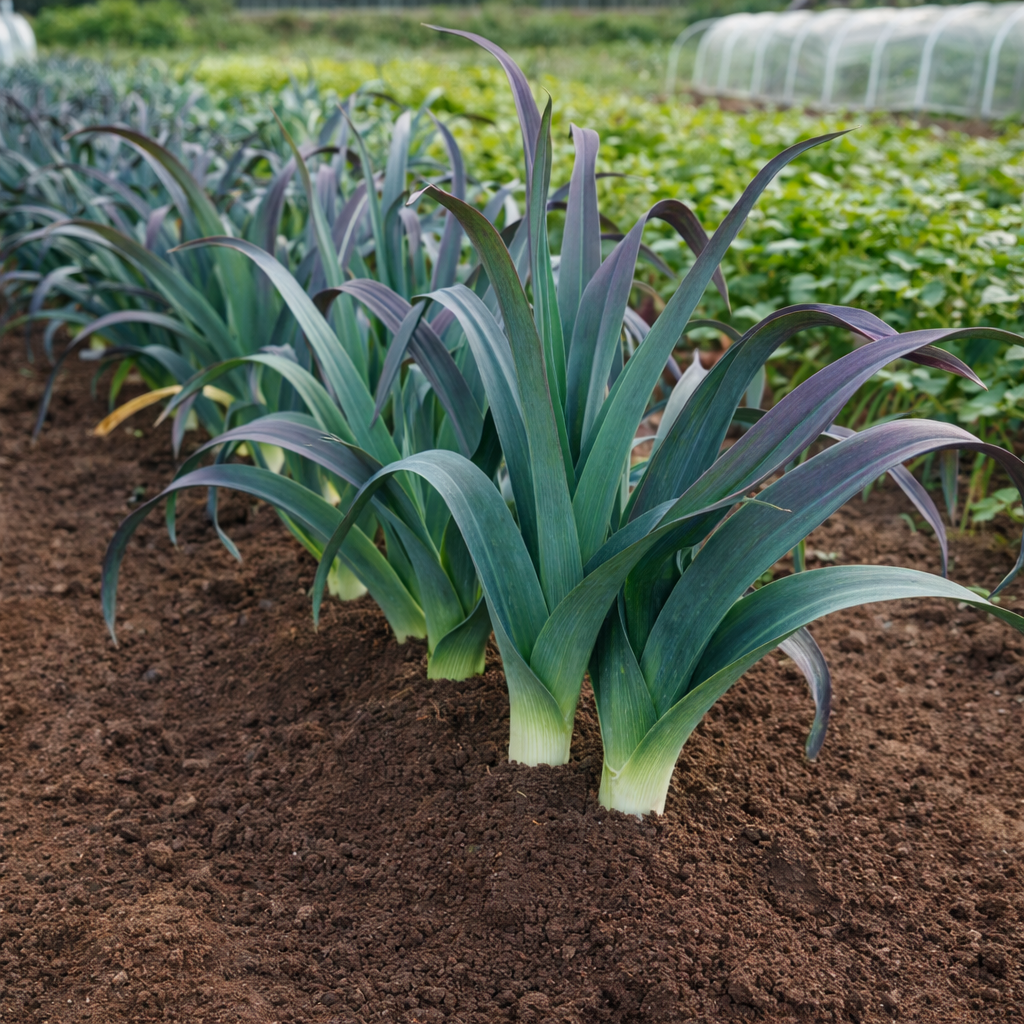
Allium porrum 'Bleu de Solaise' French heritage blue-leaved winter leek
The French heritage leek with the colour that announces itself across the winter garden — not the conventional green but a striking, almost ornamental blue-grey, with the deepest blue tones developing as the weather turns cold. Bleu de Solaise (anglicised as Blue Solaise) is a nineteenth-century French variety prized in equal measure for its outstanding cold-hardiness (genuinely surviving temperatures down to -15°C without protection), its long, thick, sweet-flavoured shanks, and its remarkable winter beauty.
The flavour is everything a properly-grown leek should deliver: sweet, mild, deeply allium without harshness, with a fine tender texture in the white shank and a more robust character in the dark blue leaves. The shanks typically reach 25–30cm of usable white and pale blue stem with a 4–5cm diameter when well grown — substantial leeks for the winter kitchen, not small thin shoots. The plants stand in the ground from October right through to March, providing fresh leeks during exactly the months when the rest of the garden is shut down.
The decorative value is genuinely worth noting. A row of Bleu de Solaise leeks through November and December, their blue-grey foliage standing tall while everything else has been cut back, is one of the most distinctive sights in the winter kitchen garden. They earn their place in ornamental potager designs as readily as in production vegetable beds.
Bleu de Solaise is open-pollinated heritage, in continuous cultivation in France since at least 1885. Seed saved from second-year flowering plants will grow true the following year.
A note on growing
Sow indoors from February to April in trays or modules at 1cm depth in seed compost. Germination takes 10–21 days at 15–20°C; leek seed is slow and germination is rarely simultaneous, so be patient. Alternatively, direct sow outdoors from March to May in a seedbed. Seedlings should be grown on to pencil-thickness (around 20cm tall) before transplanting — usually June to July.
Transplanting leeks is the slightly idiosyncratic step that defines British leek culture. Make a 15cm-deep hole with a dibber, drop one seedling per hole, and do not backfill the hole with soil. Instead, fill the hole with water, which settles enough soil around the roots to anchor the plant while leaving the hole open. As the leek grows, the surrounding soil gradually falls in around the developing shank, blanching it white and producing the long pale stem prized in the kitchen. Space plants 15cm apart in rows 30cm apart.
Water consistently through the growing season. Feed monthly with a balanced liquid fertiliser through summer to support strong shank development. In autumn, you can earth up around the plants further for additional blanching and protection against cold — though Bleu de Solaise scarcely needs the protection.
Harvest from October onwards by lifting plants individually with a fork (don't try to pull them out by the leaves — the shank usually breaks). Leeks improve in the ground through autumn cold and remain fresh and usable right through to March. Many gardeners harvest right through winter, lifting as needed.
Where it shines
In the kitchen, Bleu de Solaise is the leek of slow-cooked British winter classics. Cock-a-leekie soup. Leek and potato soup. Leek and bacon quiche. Leek braised in butter and cream as a side. Leek and goat's cheese tart. The mild sweetness pairs beautifully with mature cheese, butter, cream, and stock. Strip away the outer leaves, slit the leek lengthways, wash thoroughly under cold water to remove any grit, then slice and cook as required.
In the garden, leeks occupy a slot in the rotation cycle alongside onions and other alliums — useful as a follow-on crop after early peas, beans, or new potatoes are cleared in July. The plants tolerate fairly poor soil and rarely require special care. Pair Bleu de Solaise with the more traditional Musselburgh in the same bed for visual variety and a slightly extended harvest window.
Plant alongside
Leeks are themselves valuable companion plants for carrots — their strong scent confuses carrot fly. Plant alongside carrots, celery (which they protect from carrot fly while celery's scent in turn deters leek moth), and brassicas. Calendula 'Neon' attracts beneficial insects. Avoid planting near beans or peas, which compete for similar nutrients.
Material & Sizing
All of our products are handmade in the UK using carefully selected materials, chosen for durability and suitability for their intended use.
All dimensions are approximate and measured externally.
As each item is handmade, minor variations in size and finish may occur.
This does not affect the strength or intended use of the product.
Materials
- Crafted from quality timber or materials appropriate to the product type
- Designed for strength, stability, and everyday use
- Finished with care to ensure a clean, consistent appearance
(Planters are built using timber suited for outdoor use. Non-Outdoor items use untreated materials where appropriate.)
Sizing
- Dimensions are listed on each product page
- Measurements are approximate due to the handmade nature of our products
- If you need a custom size or have specific requirements, bespoke options are available
If you’re unsure which size or product is right for your space, feel free to get in touch before ordering.
If you have any questions before ordering, feel free to get in touch.
Once your order has been dispatched, you’ll receive a confirmation email with tracking details. You can also view your order status anytime by signing in to your customer account.