

Lettuce Lollo Rossa
Lettuce Lollo Rossa
Couldn't load pickup availability
- Handmade in the UK
- Crafted from quality materials
- Made to order
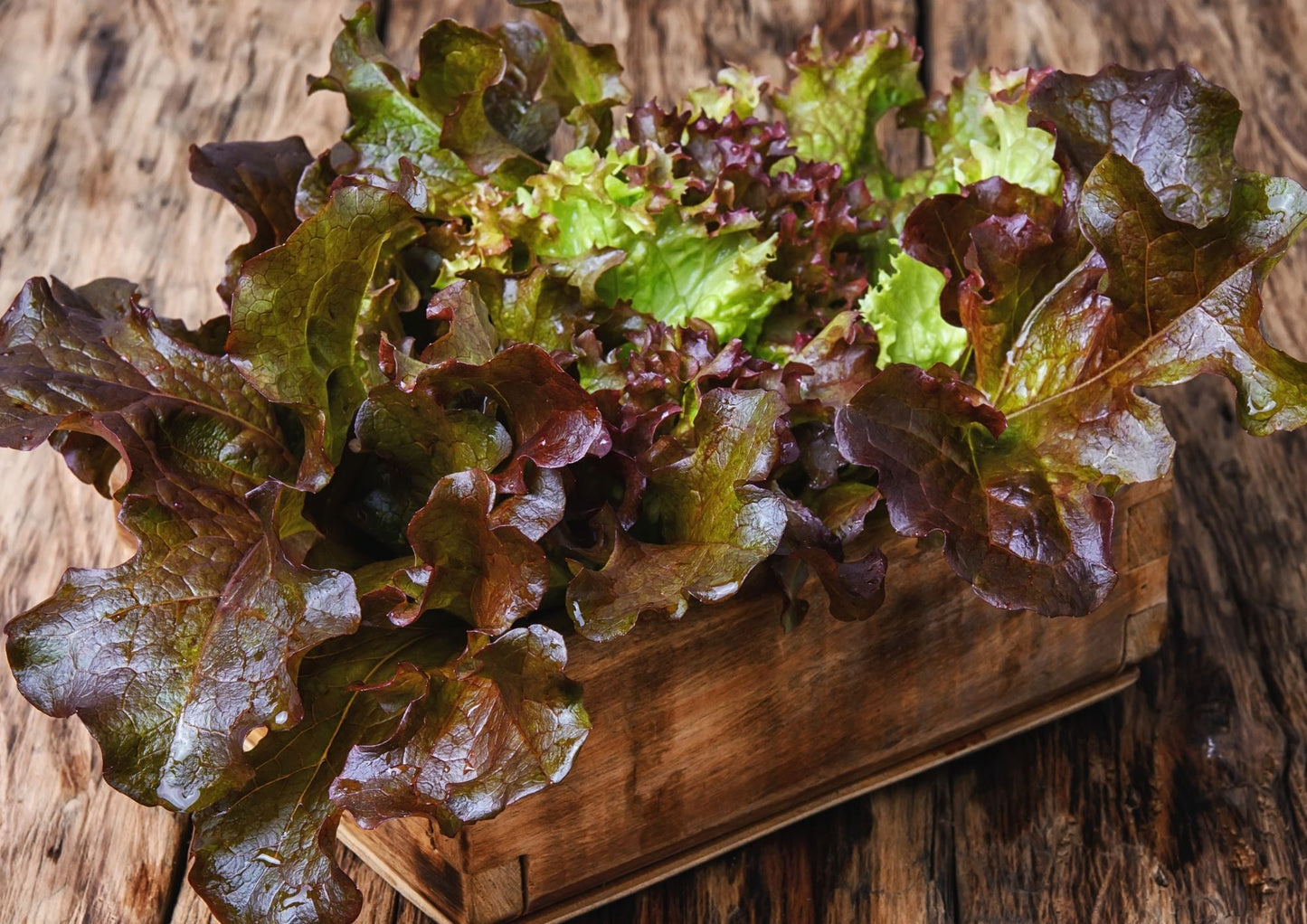
Lactuca sativa 'Lollo Rossa' Italian heritage loose-leaf red frilled lettuce
The Italian frilly red lettuce that brings every salad bowl to life. Lollo Rossa produces non-hearting, loose, deeply frilled leaves with a sharply ruffled edge in green tones at the base shading to deep burgundy-red at the tips. The leaves are tender, mildly nutty in flavour, and visually unmistakeable — once you've grown Lollo Rossa, an all-green salad looks slightly dull by comparison. This is the lettuce that turns a basic plate of leaves into something that feels considered.
Lollo Rossa is a non-hearting variety, which fundamentally changes how you grow and harvest it compared to hearting types like Little Gem. Rather than waiting for a single dense heart to form and cutting the whole plant, Lollo Rossa is a cut-and-come-again lettuce: pick the outer leaves as needed and the inner leaves continue producing. A single plant can be picked from for two to three months continuously, providing salad through summer from a comparatively small bed area.
The flavour is gentler than the bitter Italian reds (radicchio, treviso) but considerably more characterful than colourless iceberg types — a slight nuttiness, a touch of mineral freshness, and the kind of tender chewability that makes a good lettuce. The colour intensifies in cooler conditions: spring and autumn-sown plants typically show the deepest reds, while peak summer plants can lean greener if not stressed.
Lollo Rossa is open-pollinated heritage, originally Italian in origin and now a global salad-leaf staple. Seed saved from your best plants will grow true the following year.
A note on growing
Sow indoors from February to April for the earliest crops, or direct outdoors from April through to August. Sow seed at 1cm depth, thinly. Germination takes 7–14 days; cooler conditions (10–18°C) produce the best germination. Soil temperatures above 25°C dramatically reduce germination, so July and August sowings benefit from evening watering to cool the soil.
Thin or transplant seedlings to 20–25cm apart in rows 25cm apart. For cut-and-come-again production, plants can be left at higher densities — even 15cm apart — since you're not trying to grow large hearts.
Water consistently to prevent bitter flavour and bolting. Mulch around plants to retain moisture. Slugs are the main pest; check plants regularly. The red coloration partly serves as a defence against UV stress, so Lollo Rossa tolerates summer sun better than many tender lettuces.
For continuous harvest, sow short rows every two to three weeks from April through August. Succession sowing is the key to a continuous summer salad supply.
Harvest from June onwards by picking outer leaves individually — lift leaves cleanly from the base of the plant with a sharp tug rather than cutting (cutting leaves stumps that can rot). Plants picked this way continue producing for two to three months. Alternatively, cut entire young plants at 5cm tall for baby-leaf salad, which Lollo Rossa is particularly good for.
Where it shines
In the kitchen, Lollo Rossa is the visual variety in mixed salads. Add to mixed-leaf salads for instant colour contrast. Use as a base for warm chicken or duck salads — the red leaves stand up to a hot dressing better than soft butterhead types. Garnish summer plates with single frilly leaves. Use in summer sandwiches where appearance matters. The flavour pairs beautifully with walnut oil, balsamic vinegar, blue cheese, smoked meats, and fresh fruit (peaches, pears).
In the garden, Lollo Rossa earns its place in two ways: it provides colour variation in mixed salad sowings (one row each of green Little Gem and red Lollo Rossa makes the entire bed more interesting), and it brings genuine ornamental value to the kitchen garden. The frilly red leaves are attractive enough to plant along bed edges or in containers on the patio.
Plant alongside
Lettuce is the universal companion plant of the vegetable garden. Plant alongside slow-growing brassicas (which provide afternoon shade), between rows of carrots, beetroot, and onions. Calendula 'Neon' attracts beneficial predators that control aphids. Pair with Little Gem and Tom Thumb in a single mixed-salad bed for three different lettuce textures and colours from one sowing.
Material & Sizing
All of our products are handmade in the UK using carefully selected materials, chosen for durability and suitability for their intended use.
All dimensions are approximate and measured externally.
As each item is handmade, minor variations in size and finish may occur.
This does not affect the strength or intended use of the product.
Materials
- Crafted from quality timber or materials appropriate to the product type
- Designed for strength, stability, and everyday use
- Finished with care to ensure a clean, consistent appearance
(Planters are built using timber suited for outdoor use. Non-Outdoor items use untreated materials where appropriate.)
Sizing
- Dimensions are listed on each product page
- Measurements are approximate due to the handmade nature of our products
- If you need a custom size or have specific requirements, bespoke options are available
If you’re unsure which size or product is right for your space, feel free to get in touch before ordering.
If you have any questions before ordering, feel free to get in touch.
Once your order has been dispatched, you’ll receive a confirmation email with tracking details. You can also view your order status anytime by signing in to your customer account.