

Onion Red Baron
Onion Red Baron
Couldn't load pickup availability
- Handmade in the UK
- Crafted from quality materials
- Made to order
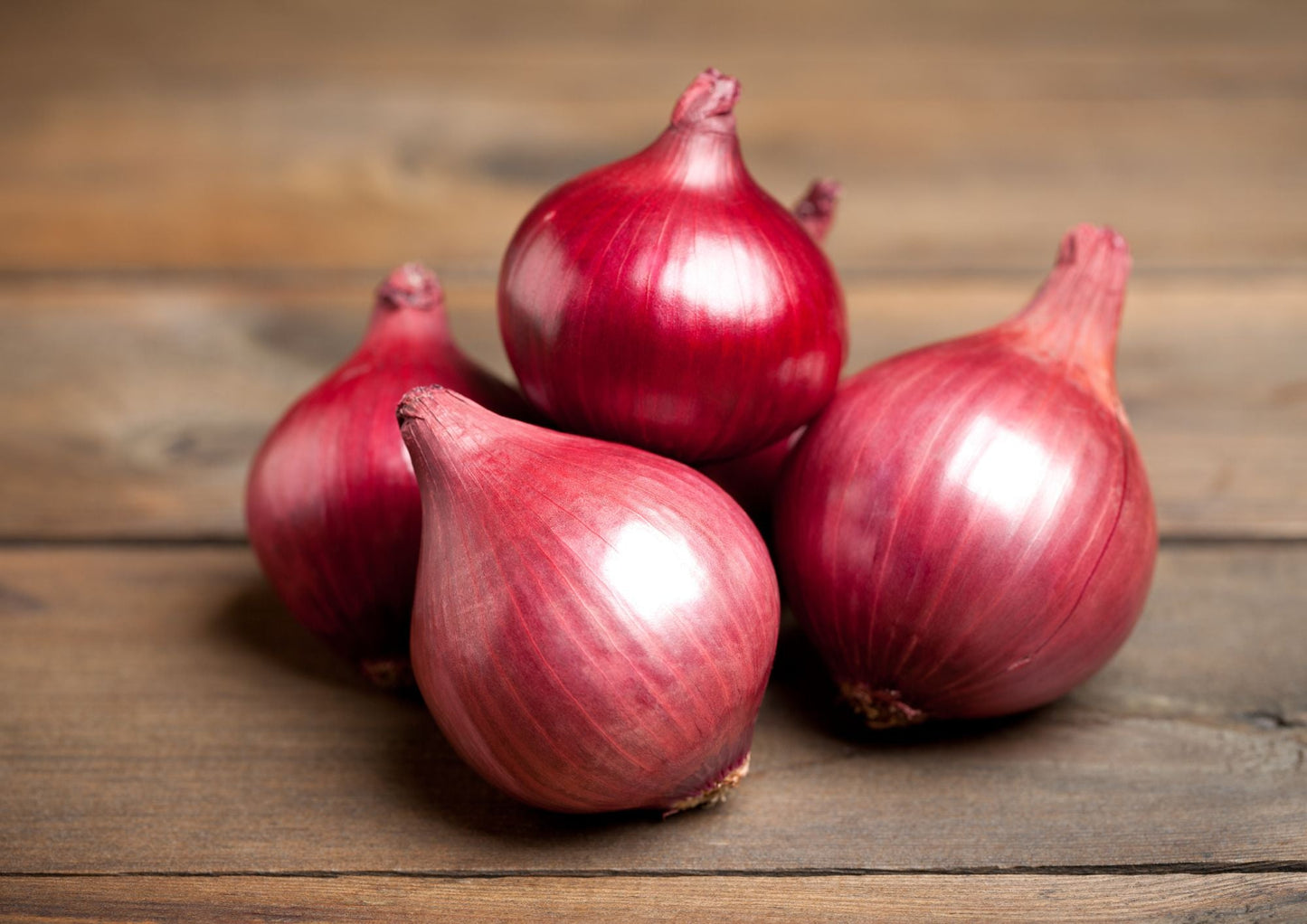
Allium cepa 'Red Baron' Dutch heritage red onion with deep ruby-red colour
The deep ruby-red onion that has become the standard red culinary onion in British kitchen gardens and supermarkets alike. Red Baron produces medium-sized globe-shaped bulbs with intense red-purple skins and red-ringed white flesh — slice one through and the concentric rings glow like a polished gemstone. The flavour is the proper red-onion profile: sweeter and milder than yellow culinary onions, with a slight sharpness that mellows further when cooked, making it the universal red onion for fresh eating and slow cooking alike.
Where Ailsa Craig is the show-onion size, Red Baron is the everyday-domestic size — bulbs typically 150–200g, the right scale for a single recipe rather than family-feeding the multitude from one onion. The skin cures to that distinctive deep red-purple colour and store well from harvest through to following March or April. The keeping quality is genuinely outstanding for a red onion: this is the variety to grow for winter red onion supply rather than buying anything from a supermarket between October and Easter.
The colour is the visual appeal, but the flavour is the kitchen advantage. Red Baron's sweetness suits the raw applications where red onions matter most — on burgers, in salads, on top of cheese, in salsas, in pickled rings on tacos — while its long cooking quality makes it equally fine in slow-cooked stews and braises. For any garden where red onions feature regularly in cooking, Red Baron is the obvious choice.
Red Baron is open-pollinated heritage of Dutch origin. Seed saved from second-year flowering plants will grow true the following year.
A note on growing
Sow indoors from February to April in modules under cover at 15–18°C, or direct outdoors from March to April once soil temperatures reach 7°C. Sow at 0.5cm depth in seed compost. Germination takes 10–14 days. Grow on in cooler conditions.
Plant out from April to early May, spacing 10–15cm apart in rows 30cm apart. Choose a sunny, open position in fertile, well-drained soil that has had well-rotted manure dug in the previous autumn. Onions hate competition — keep the bed scrupulously weed-free, ideally by gentle hoeing rather than digging, which can damage developing bulbs.
Water consistently through the growing season, particularly during bulb formation in June and July. Stop watering in late July to encourage proper ripening. Bend the foliage over gently in early August once tops start yellowing.
Harvest from August to September once the tops have yellowed and fallen over naturally. Lift bulbs gently on a dry day. Cure for 7–10 days on the soil surface or on slatted shelves in a greenhouse, then store in net bags, trays, or strings in a cool, dry, well-ventilated place.
Where it shines
In the kitchen, Red Baron is the universal red onion. Slice raw onto burgers, into salads, on top of pizzas, into salsas, and into Mexican-style preparations. Pickle rings in white wine vinegar with peppercorns for a beautiful pink garnish that keeps for months. Caramelise slowly with brown sugar and balsamic for the perfect French onion soup or pizza topping. Slice into wedges and roast in olive oil as a side. Use raw in sandwich combinations where the colour adds appeal: red onion with goat's cheese and tomato on sourdough is genuinely elevated by the colour alone.
In the garden, Red Baron pairs naturally with Ailsa Craig (large yellow) and White Lisbon (spring onion) to provide the complete domestic onion range from your own beds. A row of 30 plants of each variety provides effective year-round onion supply — large yellow for cooking, red for fresh and decorative use, white spring onions for salads and stir-fries.
Plant alongside
Onions are valuable companion plants — their sulphur scent deters aphids, carrot fly, and many soil-dwelling pests. Plant alongside carrots (mutual protection), beetroot, lettuce, and brassicas. Calendula 'Neon' attracts beneficial predators. Avoid planting near beans and peas.
Material & Sizing
All of our products are handmade in the UK using carefully selected materials, chosen for durability and suitability for their intended use.
All dimensions are approximate and measured externally.
As each item is handmade, minor variations in size and finish may occur.
This does not affect the strength or intended use of the product.
Materials
- Crafted from quality timber or materials appropriate to the product type
- Designed for strength, stability, and everyday use
- Finished with care to ensure a clean, consistent appearance
(Planters are built using timber suited for outdoor use. Non-Outdoor items use untreated materials where appropriate.)
Sizing
- Dimensions are listed on each product page
- Measurements are approximate due to the handmade nature of our products
- If you need a custom size or have specific requirements, bespoke options are available
If you’re unsure which size or product is right for your space, feel free to get in touch before ordering.
If you have any questions before ordering, feel free to get in touch.
Once your order has been dispatched, you’ll receive a confirmation email with tracking details. You can also view your order status anytime by signing in to your customer account.