


Platycodon Balloon Flower Mixed
Platycodon Balloon Flower Mixed
Couldn't load pickup availability
- Handmade in the UK
- Crafted from quality materials
- Made to order


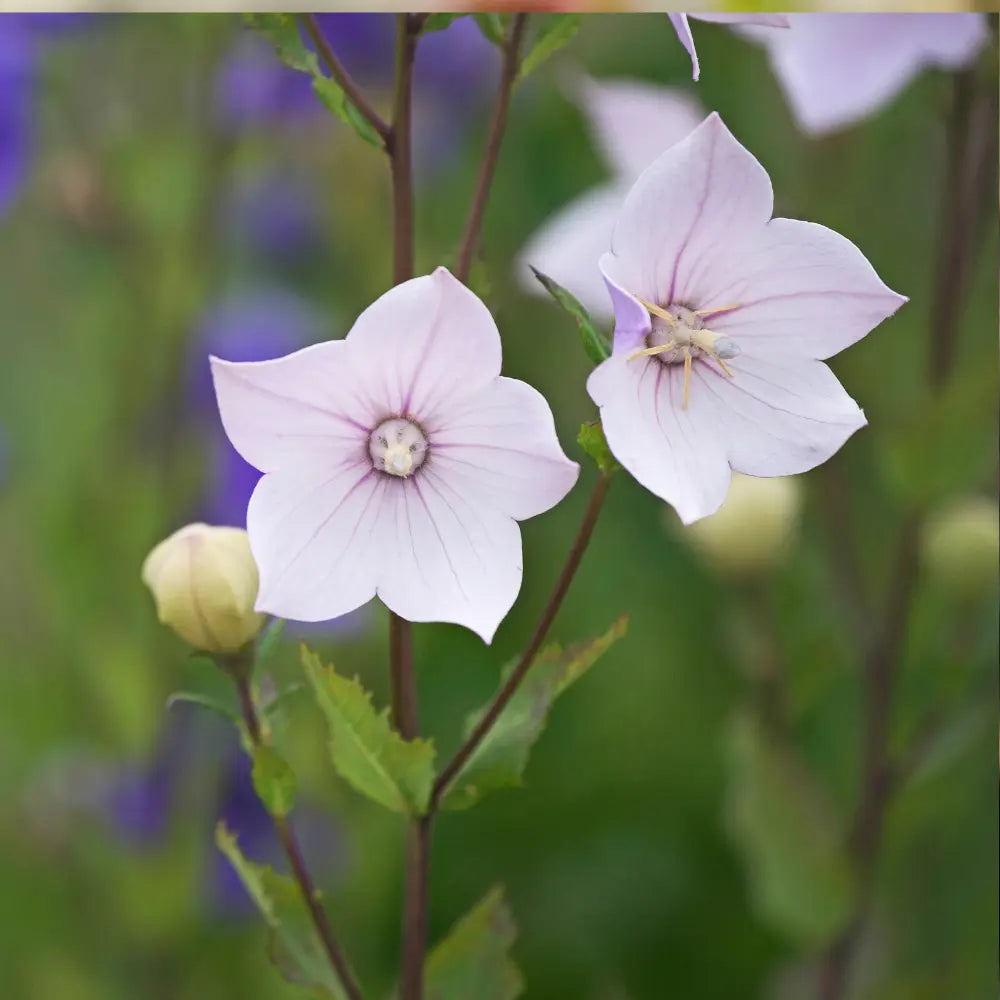
Platycodon grandiflorus 'Mixed' Balloon Flower 'Mixed'
Magical hot-air-balloon-shaped buds that swell into perfectly geometric inflated spheres before popping open into wide, slightly cupped, star-shaped bells in clear blue, soft pink and pure white — Platycodon is the long-lived cottage perennial that delivers two distinct stages of fascination from a single plant, and one of the most rewarding garden investments you can make from a packet of seed.
This is one of the most quietly magical plants in the cottage garden. Every Platycodon flower starts as a small green bud, but as the flower develops, the bud swells dramatically into a perfectly geometric inflated balloon shape — a small living hot-air-balloon or paper lantern that holds its shape for days before finally splitting along its five seams and opening into the wide, open, slightly-cupped star-shaped bells that give the plant its other common name (Chinese Bellflower). Each flower is 6–7cm across with slightly recurved petal tips and a clean precise geometry that makes it look hand-cut rather than grown. The mixed variety provides all three colours simultaneously — clear blue, soft pink, and pure white flowers appearing together on the plant throughout the July–September flowering season. Long-lived hardy perennial (H5, reliably hardy to at least -15°C). Returns every spring and increases in floriferousness year by year, justifying the patience required during establishment. Height 60–80cm.
A note on growing
Platycodon seeds need light to germinate — the precise opposite of Phlox varieties which need darkness. Surface-press the seeds into moist compost without any covering. Sow indoors March–May at 18–20°C. Germination 14–28 days.
Platycodon develops a substantial taproot from the earliest stages and resents root disturbance — use deep modules rather than shallow trays to allow taproot development. When potting on, turn the module upside down and allow the rootball to drop out intact; never pull or force the root from the container. Plant into the final position in May–June, disturbing the rootball as little as possible.
Choose the planting position carefully. Platycodon can live in one position for 10–15 years or more — once established, do not move it. Full sun or light partial shade. Free-draining soil that has not been recently manured. Dig a hole to comfortably accommodate the rootball, place the plant without disturbing the roots, firm gently, water in.
⚠️ The most important practical warning — mark the location: Platycodon is notably late to emerge in spring, significantly later than most border perennials. While the borders are becoming active with new growth in March and April, Platycodon shows nothing above ground. Only in late April or May do the first shoots emerge. Gardeners who haven't marked the position frequently dig up the dormant roots in spring, mistaking the bare area for empty ground. Place a permanent label or cane at each plant's position in autumn before the foliage disappears — this single precaution prevents the most common cause of inadvertent Platycodon loss.
Vase-life tip: Platycodon stems exude a latex-like sap when cut that causes the stem to seal and reduces water uptake. Sear cut stem ends with a lit match immediately after cutting to seal the cut and extend vase life dramatically.
Where it shines
In cottage borders as a long-term architectural feature — the slow establishment is worth it because Platycodon improves every year for a decade or more. In wildlife gardens, where the open bell flowers are particularly valued by bumblebees. As a conversation-piece plant — visitors always stop to ask about the inflated balloon buds. In rockeries and gravel gardens, where the well-drained conditions suit. As cut flowers for unusual modern arrangements (with the match-searing trick).
Plant alongside
For a long-lived cottage perennial scheme, combine Platycodon with Echinacea purpurea, Echinops ritro 'Veitch's Blue' and Penstemon 'Cambridge Mix' — all matching Platycodon's preference for full sun and well-drained soil, all building substantial garden features over the same multi-year establishment timeframe. For colour-coordinated cottage planting, pair with Aquilegia 'Columbine Blue' and Forget-me-not 'White'.
Material & Sizing
All of our products are handmade in the UK using carefully selected materials, chosen for durability and suitability for their intended use.
All dimensions are approximate and measured externally.
As each item is handmade, minor variations in size and finish may occur.
This does not affect the strength or intended use of the product.
Materials
- Crafted from quality timber or materials appropriate to the product type
- Designed for strength, stability, and everyday use
- Finished with care to ensure a clean, consistent appearance
(Planters are built using timber suited for outdoor use. Non-Outdoor items use untreated materials where appropriate.)
Sizing
- Dimensions are listed on each product page
- Measurements are approximate due to the handmade nature of our products
- If you need a custom size or have specific requirements, bespoke options are available
If you’re unsure which size or product is right for your space, feel free to get in touch before ordering.
If you have any questions before ordering, feel free to get in touch.
Once your order has been dispatched, you’ll receive a confirmation email with tracking details. You can also view your order status anytime by signing in to your customer account.