

Spinach Perpetual
Spinach Perpetual
Couldn't load pickup availability
- Handmade in the UK
- Crafted from quality materials
- Made to order
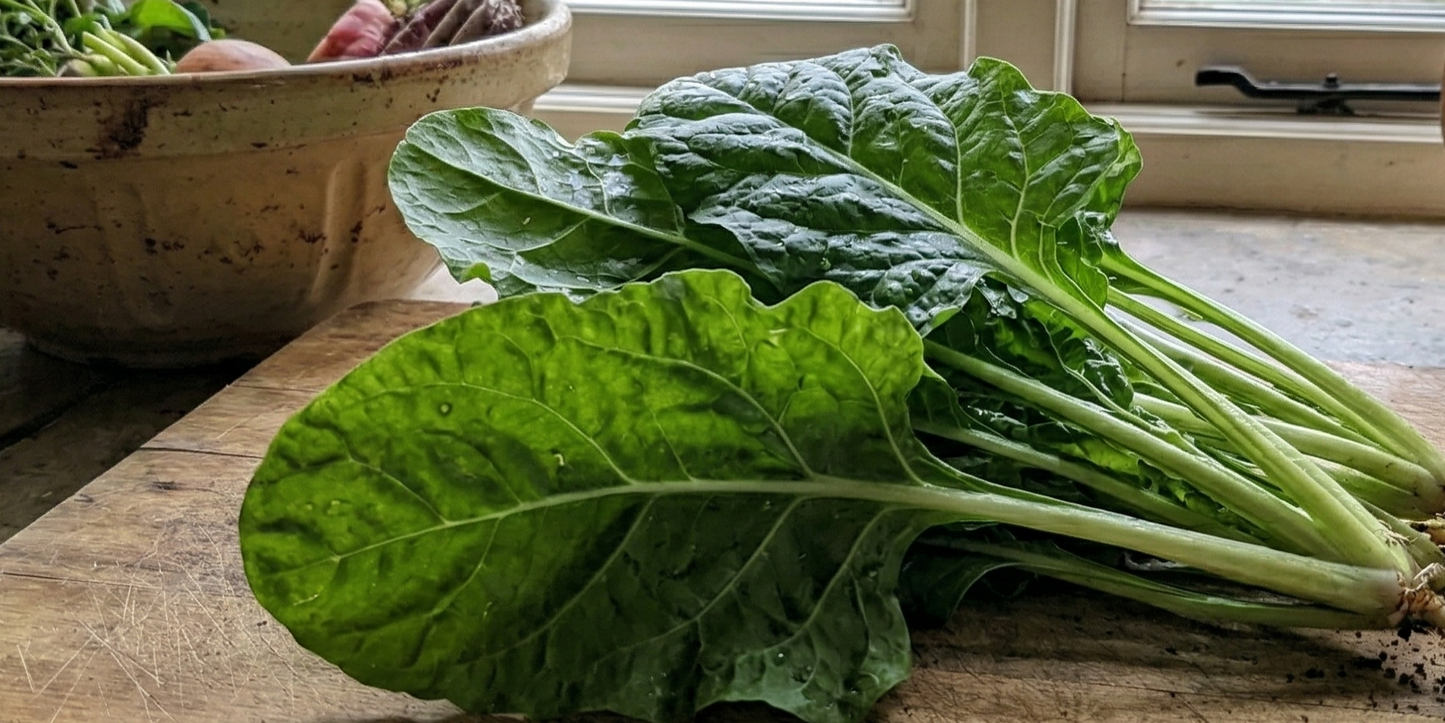
Beta vulgaris subsp. cicla 'Perpetual' Heritage leaf beet, the "spinach that doesn't bolt"
Perpetual Spinach is the British heritage variety that solves the central problem of growing spinach in the UK climate. Conventional spinach (Spinacia oleracea) bolts to seed quickly in summer heat, producing only a few weeks of useful leaves before running to flower. Perpetual Spinach — properly speaking, a leaf beet rather than true spinach, but cooked and used identically — behaves entirely differently. A single spring sowing produces useful leaves from June right through to the following spring, without bolting, without becoming bitter, and without requiring multiple succession sowings.
The leaves are larger and sturdier than true spinach, with thicker midribs and a more robust texture. They cook in the same time and taste essentially the same — mild, sweet, slightly mineral, the proper spinach flavour — but they hold their structure better in cooking and don't reduce to the almost-nothing volume that defeats true spinach. A single colander of Perpetual leaves wilts down to a useful portion, rather than the disappearing-act of true spinach.
The cropping period is the genuine reason to grow it. Sown in April, Perpetual Spinach produces useful leaves from June through autumn, survives winter unprotected in most of England (with some protection from fleece in colder northern areas), and produces a final flush of spring leaves in March and April before bolting in May. Twelve months of continuous spinach harvests from one packet of seed. For households that use spinach regularly, this is the variety that actually delivers.
Perpetual Spinach is open-pollinated heritage and has been a British kitchen-garden staple for over 150 years. Seed saved from second-year flowering plants will grow true the following year.
A note on growing
Direct sow outdoors from April to August. Sow seed thinly at 2cm depth in rows 30cm apart. Each "seed" is a multigerm cluster — expect 2–4 seedlings per station and thin to the strongest single plant once they are large enough to handle, leaving 25cm between final plants. Germination takes 10–14 days.
For autumn-and-winter cropping (the best use of the variety), sow in late July or early August. Plants will produce a generous flush of leaves through autumn, slow but continue cropping through winter, and surge again in spring.
Water consistently. Perpetual Spinach is more drought-tolerant than true spinach but produces softer, sweeter leaves with consistent moisture. Mulch around plants in autumn for winter protection. Feed monthly with a balanced liquid fertiliser through spring and summer.
Harvest from June onwards by picking outer leaves individually — cut-and-come-again style. The plant continues producing inner leaves as long as you keep picking the outer ones. A well-grown plant can be harvested from continuously for 9–12 months. Late-summer-sown plants particularly suit cut-and-come-again harvesting through autumn and into winter.
Where it shines
In the kitchen, Perpetual Spinach is used identically to true spinach. Wilt with garlic and olive oil as a side. Add to omelettes, frittatas, and quiches. Use in pasta sauces, soups, curries, and dahl. Layer into lasagne. Make spanakopita, palak paneer, or saag aloo. Add raw young leaves to salads. Wilt into risottos. Use as the base for green smoothies (the slightly milder flavour than true spinach makes Perpetual more palatable in raw drinks). The stems are also edible and can be cooked separately as a slow-cooked vegetable, similar to chard stems.
In the garden, three or four well-grown plants provide a household with as much spinach as it needs through nearly the entire year. Particularly outstanding for winter and early-spring greens when little else is producing. Pair with Rainbow Chard for a complete leaf-beet bed providing varying colour and texture from the same family.
Plant alongside
Perpetual Spinach tolerates close neighbours politely. Plant alongside beans (which fix nitrogen), brassicas (which need similar growing conditions), and onions for general pest protection. Calendula 'Neon' attracts beneficial insects. Avoid planting near other beet-family crops to reduce shared pest pressure.
Material & Sizing
All of our products are handmade in the UK using carefully selected materials, chosen for durability and suitability for their intended use.
All dimensions are approximate and measured externally.
As each item is handmade, minor variations in size and finish may occur.
This does not affect the strength or intended use of the product.
Materials
- Crafted from quality timber or materials appropriate to the product type
- Designed for strength, stability, and everyday use
- Finished with care to ensure a clean, consistent appearance
(Planters are built using timber suited for outdoor use. Non-Outdoor items use untreated materials where appropriate.)
Sizing
- Dimensions are listed on each product page
- Measurements are approximate due to the handmade nature of our products
- If you need a custom size or have specific requirements, bespoke options are available
If you’re unsure which size or product is right for your space, feel free to get in touch before ordering.
If you have any questions before ordering, feel free to get in touch.
Once your order has been dispatched, you’ll receive a confirmation email with tracking details. You can also view your order status anytime by signing in to your customer account.