

Squash Turks Turban
Squash Turks Turban
Couldn't load pickup availability
- Handmade in the UK
- Crafted from quality materials
- Made to order
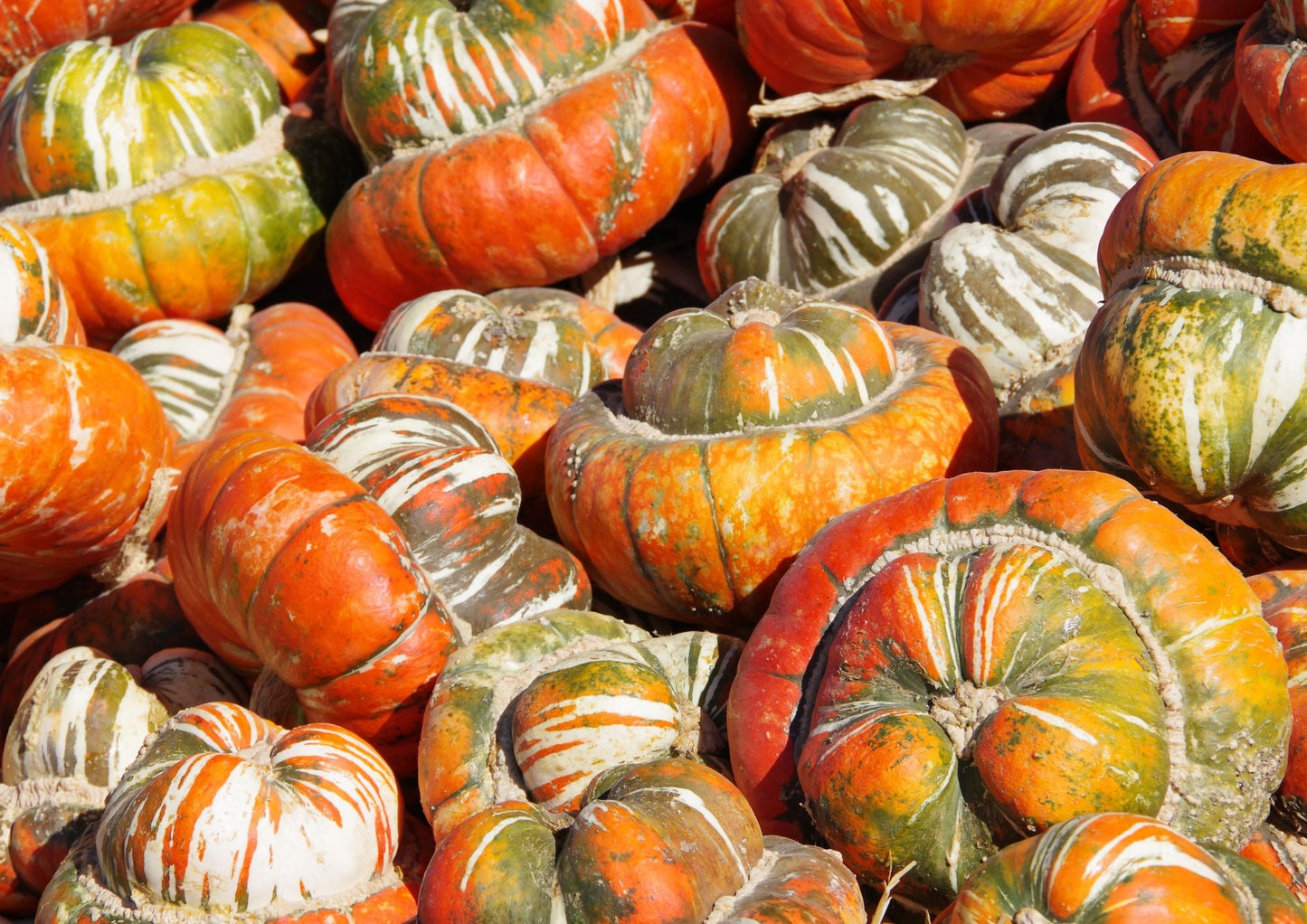
Cucurbita maxima 'Turks Turban' Heritage ornamental and edible turban-shaped squash
The most theatrical squash in the catalogue, and entirely deservedly named. Turk's Turban produces extraordinary turban-shaped fruits with a buttoned crown protruding from the top of each squash, in a riot of stripes and blotches in scarlet-orange, cream, deep green, and burnt umber. No two fruits are exactly alike — each plant produces individual variations on the basic turban theme, making this one of the most visually distinctive vegetables you can grow. The variety is genuinely old, in continuous cultivation since at least the 1820s and possibly considerably longer, and has been a fixture of harvest-festival displays, autumn table centrepieces, and ornamental kitchen gardens for two centuries.
The "ornamental" framing slightly underestimates Turk's Turban. The fruits are entirely edible — orange flesh inside, with a flavour comparable to Hubbard or buttercup squashes, sweet and nutty though less dense than Crown Prince. The slight inconvenience of cooking with such a sculptural fruit (the turban shape doesn't lend itself to easy slicing) is more than offset by the option to use it decoratively for two or three months on a kitchen shelf, then cook it through November and December when its ornamental usefulness has passed.
The decorative value through autumn is the entire point. A row of Turk's Turban displayed alongside Crown Prince and Queensland Blue on a kitchen dresser, in a harvest-festival arrangement, or on an autumn table is a substantial visual statement — the combination of architectural blues (Crown Prince), deep purples (Queensland Blue), and the wild scarlet-cream-green stripes of Turk's Turban genuinely outclasses commercial autumn decoration. For halloween, Turk's Turban is more visually interesting than the standard orange pumpkin without being twee.
Turks Turban is open-pollinated heritage. Seed saved from your best fruits will grow true to type the following year, though plants cross-pollinate with other Cucurbita maxima varieties grown nearby, so isolation is needed for pure seed-saving.
A note on growing
Sow indoors from late April to mid-May in 9cm pots of seed compost, planting seeds on their edge at 2cm depth. Germination takes 5–10 days at 18–21°C. Pot on to 12cm pots as seedlings establish.
Plant out from early June onwards once all frost risk has passed. Choose a sunny, sheltered position in soil enriched with substantial well-rotted manure or compost. Allow 1.5–2m between plants — this is a trailing variety with vigorous vines reaching 3–4 metres in good conditions.
Water consistently and generously through summer. Feed weekly with high-potash tomato food from flowering onwards. Mulch around the base to retain moisture. Place developing fruits on tiles or wooden boards to prevent rotting where they contact damp soil.
Harvest in October before the first hard frost. The fruits should feel hard, with a stem that has turned woody and started to crack. Cut each fruit with 5–10cm of stem still attached — the stem seals the fruit and is essential for both storage and decorative display. Cure for 10–14 days in a warm room (20–25°C) before storage or display — this hardens the skin and develops the full colour intensity. After curing, fruits keep their decorative appeal for 2–4 months and remain edible for 3–5 months.
Where it shines
In the kitchen, Turk's Turban suits any preparation that you would use butternut squash or buttercup squash for. Roast wedges with olive oil. Make soup. Bake whole half-fruits stuffed with rice, sausagemeat, or quinoa. Use in curries, risottos, and stews. The flavour pairs with sage, butter, parmesan, walnuts, and warming spices. Cut the fruit carefully — the turban shape makes the first cut slightly awkward; halve through the equator (between the turban and the body) rather than top to bottom for the easiest access to the flesh.
In the garden, Turk's Turban earns its place through visual drama rather than crop yield. Two or three plants is enough for most gardens — the vines need genuine space, and the ornamental impact is delivered by even a few well-grown fruits. For maximum ornamental effect, harvest in late September while the colour is at its most intense, cure briefly, and display through October and November before transitioning to kitchen use in December. Pair with Crown Prince F1 and Queensland Blue for the complete winter-squash storage and display range.
Plant alongside
Squashes benefit from companion planting that attracts pollinators and deters pests. Plant alongside French Marigold 'Spanish Brocade' to deter aphids and squash bugs. Calendula 'Neon' attracts beneficial predators. Nasturtiums act as decoy crops. The "Three Sisters" planting of squash with sweetcorn and climbing beans is the traditional combination and works particularly well. Avoid planting near potatoes.
Material & Sizing
All of our products are handmade in the UK using carefully selected materials, chosen for durability and suitability for their intended use.
All dimensions are approximate and measured externally.
As each item is handmade, minor variations in size and finish may occur.
This does not affect the strength or intended use of the product.
Materials
- Crafted from quality timber or materials appropriate to the product type
- Designed for strength, stability, and everyday use
- Finished with care to ensure a clean, consistent appearance
(Planters are built using timber suited for outdoor use. Non-Outdoor items use untreated materials where appropriate.)
Sizing
- Dimensions are listed on each product page
- Measurements are approximate due to the handmade nature of our products
- If you need a custom size or have specific requirements, bespoke options are available
If you’re unsure which size or product is right for your space, feel free to get in touch before ordering.
If you have any questions before ordering, feel free to get in touch.
Once your order has been dispatched, you’ll receive a confirmation email with tracking details. You can also view your order status anytime by signing in to your customer account.